
.jpg?auto=compress,format&w=1920&blur=80&func=crop&q=70&org_if_sml=1)

Channarayana Durga Trek
Climb to an ancient fort with dominating views
Have questions? Speak to our expert Trek Advisor
We have an expert team of Trek Advisors to help you choose the right trek. So if you have questions like, "Can I do this trek?" or "Who else is trekking?", please get in touch. Talk to our Trek Advisors
Age Limits on Indiahikes Treks
- We have age limits on our treks. But we like to make exceptions wherever possible as we strongly believe that your age should never hold you back from exploring the outdoors.
- However, if you are above 58 years old and want to join this trek, you would need to submit a Negative Tread Mill Test (TMT) Report that is no older than one year from the date of your trek. This is over and above your fitness criteria requirements. Read more about it here.
- If you are unsure, just give us a call on 080-468-01269. We’ll help you choose the trek that best suits your fitness and experience.
Why you should opt for Indiahikes Shield
Trekking in the Himalayas comes with challenges such as heavy rain, roadblocks, floods, landslides, and permit restrictions imposed by the government. These situations are not within Indiahikes' control.
Before you register, please be prepared for the possibility that your trek might be called off due to these uncontrollable factors. In such cases, Indiahikes will make every effort to offer you a safe alternative trek. If that isn't possible, we will cancel your trek and issue a voucher for the trek fee in line with our standard cancellation policy.
However, if you would like to receive a full refund of your fee under such circumstances, opt for the Indiahikes Shield while registering. This shield grants you the option to receive a refund in case your trek is cancelled due to external reasons.
Note: Shield Refunds will not be applicable once the trek has begun, even if it cannot be completed due to unforeseen circumstances, including but not limited to adverse weather, wildlife movement, political unrest, or other such reasons.
Trek Inclusions
The Indiahikes experience
Our trek experience goes beyond a trek. With every step of the way, we connect you to nature and your inner self.
- Trek to Channarayana Durga: Experience the adventure of climbing to an ancient fort with a group with whom you form long-lasting bonds.
- Magical Sunrise & Sunset Walks: Immersive guided nature walks that reveal the hidden intricacies of the natural world around you.
- Facilitated Reflections: Conclude your adventure with meaningful reflections designed to help you reconnect with yourself and nature on a deeper level.
Who goes with you on the trek?
Trained Personnel:
- A professional Trek Leader, also serving as your lead facilitator, nature guide and storyteller, ensures the trek is enriching.
- Additional Facilitators (1 for every 10 trekkers) to ensure personalised attention and support.
- A dedicated kitchen support team to prepare fresh, wholesome meals.
Accomodation
Stay in sturdy four-season tents (two trekkers per tent) designed for comfort in all weather conditions.
Nutritious & Delicious Meals:
Vegetarian meals are freshly cooked on-site, including lunch, tea snacks, dinner, and breakfast.
Top-Quality Gear
All essential camping gear is provided, along with a fully equipped medical kit and safety equipment.
Trek Exclusions
Transport
Transport to and from the Indiahikes Southern Campus. There is a parking slot available near the campus. You can come in your own vehicle too - https://goo.gl/maps/gLyr1h1VeiGADtQ47
Anything apart from inclusions
Terms and Conditions
I understand that trekking is an adventure sport that involves:
Natural Hazards:
- Extreme Weather: Sudden rainfall, flash floods, hailstorms, thunderstorms and lightning strikes. It might even cause your trek to be called off without notice.
- Wildlife Encounters: Encounters with dangerous animals from the animal kingdom such as bears, snakes, arthropods, insects, ticks, etc can pose a serious threat.
- Encounter with different kinds of plants. Touching, eating, or any kind of interaction with a toxic, poisonous, or harmful plant can pose a serious threat too.
- Natural Disasters: Landslides, earthquakes, avalanches, and other natural disasters can occur in mountainous regions, posing significant risks.
Trail-Related risks and personal injuries:
- Slips and Falls: Uneven terrain, slippery surfaces, and smooth or loose rocks can increase the risk of falls, accidental drownings, and other injuries.
- Accidents Involving Equipment: Improper use or malfunction of equipment such as climbing gear or trekking poles can lead to accidents.
- Accidents that may cause emotional trauma, disfigurement; temporary or permanent disability, including paralysis.
- Injuries Caused by Third Parties: Accidents or injuries caused by other trekkers or individuals in the area.
- Exposure to Harmful Elements: Prolonged exposure to the sun, cold, or other elements can cause sunburn, dehydration, heat cramps or other heat-related illnesses.
Medical Emergencies:
- Limited Access to Medical Facilities: Remote trekking areas often have limited access to hospitals, clinics, or medical professionals.
- Difficulty in Evacuation: Evacuating an injured person from a remote location can be challenging and time-consuming.
Other Risks:
- Civil Disturbances or War: Political instability or conflicts in the region can pose security risks.
- Terrorism: Terrorist activities can threaten the safety of trekkers.
- Social or Labor Unrest: Protests or strikes can disrupt travel plans and create safety concerns.
- Equipment Failures: Gear failure or malfunction can lead to accidents or discomfort.
- Transportation Issues: Delays, cancellations, or accidents involving transportation can affect the trek.
- Unexpected Events: Unforeseen circumstances such as weather changes, road closures, transportation failures or natural disasters can impact the trek.
- Diseases: Trekkers may be exposed to diseases or infections prevalent in the region.
By participating in this trek, you acknowledge that:
- I am aware of these risks.
- I am voluntarily taking part in the activity.
- I will follow the safety guidelines provided.
- I am responsible for taking care of the equipment I use during the trek.
- I understand Indiahikes’ employees are qualified but have difficult jobs to perform. They seek safety, but they are not infallible. No one can predict the risks mentioned with 100% accuracy.
- I am responsible for my own safety and well-being.
I assume full and complete responsibility for physically preparing for the trek as prescribed in the eligibility criteria of the trek.
Health declaration:
I certify that:
- I am in good physical and mental health.
- I have no medical conditions that would prevent me from participating in the trek.
- I have not been advised against participating by a doctor.
Legal declaration:
I certify that:
- I am responsible for my own well-being during the trek.
- I assume all risks associated with the trek, known and unknown.
- I understand that Indiahikes is not liable for any injuries or losses I may experience.
- I understand that Indiahikes is not responsible for any medical expenses I may incur during or after the trek.
I certify that:
- I will defend/ reimburse/ pay Indiahikes in case I do anything during the trek that hurts someone else or causes damage to life or property. Be it intentional or by accident. I will pay for any repairs or medical bills that result from my actions.
- I understand that there are chances that I may feel the effects of dehydration, heatstroke or any injuries while on this trek. I am aware that the trek leader may deem it unsafe for me to continue trekking at any time, and arrange for me to descend to the base or any safer location.
- I understand that the trek leader will conduct routine health checks at all camps to measure pulse and blood pressure. I understand that Indiahikes reserves the right to exclude any trekker from continuing the trek without a monetary refund if the trekker's vital readings are below accepted norms. These norms are available with Indiahikes trek leaders.
- I understand that this is a trek with rough, rocky and slippery terrain. I understand that Indiahikes reserves the right to turn around a trekker if in the opinion of the trek leader they are unable to complete the itinerary without requiring exclusive assistance. I have realistically self-assessed my fitness and suitability for this trek before registering.
- I understand that drinking, smoking and taking any recreational drugs are strictly prohibited on the trek. I understand that I will be sent down from the trek if found using any of it. From there, I will have to exit from the basecamp immediately.
- I have carefully read and understood the provisions and legal consequences of this agreement, and I hereby agree to all of its conditions. I agree that if any portion of this agreement is found to be void or unenforceable, the remaining portions shall remain in full force and effect.
- I understand that in calculating the cost of the trek, Indiahikes has relied on my consent to these terms and their enforceability. Without this agreement, Indiahikes would not be able to offer these services. I agree that the execution of electronic transmission of this agreement shall be deemed execution of the original agreement.
- It is my responsibility to obtain information and have all the necessary documents for my trek/ trip, including medical certificates and any other required paperwork.
- I understand that I may be asked to show the documents during my travel or on the trek by officials. Indiahikes is not responsible for my failure to show the documents required.
- Indiahikes is also not responsible for any loss, theft or damage to my travel documents.
- I hereby voluntarily provide my personal ID (latest Aadhaar card or Passport) to Indiahikes for the limited and specific purposes of identity verification, obtaining trek permits, and fulfilling administrative requirements directly related to my participation in the trek. I understand that Indiahikes shall use this information only for the stated purposes and in compliance with applicable laws and guidelines. I acknowledge that Indiahikes is responsible for ensuring the confidentiality and lawful processing of my personal data. I may withdraw this consent at any time before the use of my personal information by providing written notice.
I accept the Indiahikes Cancellation Policy as follows:
The Indiahikes Standard Cancellation Policy
- Smoking, drinking, or consumption of any intoxicating substance is not permitted on an Indiahikes trek. Indiahikes has the right to terminate my trek if I’m found flouting the no drinking/smoking rule anywhere on the trek, including near or anywhere at the base camp, campsites, or Indiahikes premises.
- Indiahikes has the right to send me back from the trek in case I am affected by any form of injury or illness that renders me unable to complete the trek.
- Indiahikes has the right to send me back from the trek in case my lack of fitness affects the average trekking time of the rest of the team.
- Indiahikes has the right to send me back from the trek if I am physically ineligible to continue based on the display of blood pressure or oximeter readings beyond the acceptable range.
- Indiahikes has the right to immediately terminate my presence on the trek or basecamp in case I display any of the following unacceptable behaviours. They include:
i. Any sexual misconduct towards fellow trekkers, Indiahikes team members, or others
ii. Not adhering to the trek rules (which are laid out for everyone equally) or the trek leaders' instructions
iii. Physically and verbally aggressive/abusive towards fellow trekkers or Indiahikes team members. Which can constitute these actions:
a. If bad words/profanity are used in arguments
b. If threats are made towards Indiahikes team members or any trekker
c. If you scream/shout to express your dissatisfaction
d. If you physically push/shove any trekker
e. If I make religious, political or sexist remarks
iv. Mistreating any of the Indiahikes trekking equipment.
I agree that if my trek is terminated because of any of these reasons, I will not receive the trek completion certificate or a refund of the trek fees. In addition, I will have to bear the cost of a mule/vehicle/guide/porter to come back to the base camp.
Climb to an ancient fort with dominating views
Channarayana Durga Trek is located near to Madhugiri in the Tumkur district of Karnataka. A trek that is very close to our hearts at Indiahikes since it reveals many surprises as you go climbing through each of its layers of the fort.
The trek is very much accessible and close to the state highway 9 connecting Madhugiri and Dabbaspet. The beautiful majestic fort reminds you of medieval times that was used as a strategic fortress in this region of Madhugiri and Tumkur. It is one of the Navadurgas around Bangalore.
The entire fort is divided into multiple layers and sections. One can clearly see the brilliant minds that went into the design and structure of this fort that was built during the 16th century. The fort is daunting to you right from the time you are starting the trek from the base and it gets grandiose as you come closer.
The entire fort is divided into multiple layers and sections. One can clearly see the brilliant minds that went into the design and structure of this fort that was built during the 16th century. The fort is daunting to you right from the time you are starting the trek from the base and it gets grandiose as you come closer.
Just the sheer climb through the granite rocks adds to the thrill. Be it with false doors leading you to the wrong side of the fort, a reservoir to store water throughout the year and ancient hallways mark this for an exploration one must truly venture into.
The view from the top of the fort is also a sight to witness. You get to see the famous monolith of Madhugiri from the top and other surrounding hillocks in a grand setting.
The trek is ideal for any age group and especially for families, friends, and colleagues to start trekking. A fit trekker can complete the trek within a couple of hours while those who want to take it leisurely can spend half a day easily exploring the trek.
Why you should opt for Indiahikes Shield
Trekking in the Himalayas comes with challenges such as heavy rain, roadblocks, floods, landslides, and permit restrictions imposed by the government. These situations are not within Indiahikes' control.
Before you register, please be prepared for the possibility that your trek might be called off due to these uncontrollable factors. In such cases, Indiahikes will make every effort to offer you a safe alternative trek. If that isn't possible, we will cancel your trek and issue a voucher for the trek fee in line with our standard cancellation policy.
However, if you would like to receive a full refund of your fee under such circumstances, opt for the Indiahikes Shield while registering. This shield grants you the option to receive a refund in case your trek is cancelled due to external reasons.
Note: Shield Refunds will not be applicable once the trek has begun, even if it cannot be completed due to unforeseen circumstances, including but not limited to adverse weather, wildlife movement, political unrest, or other such reasons.
Trek Inclusions
The Indiahikes experience
Our trek experience goes beyond a trek. With every step of the way, we connect you to nature and your inner self.
- Trek to Channarayana Durga: Experience the adventure of climbing to an ancient fort with a group with whom you form long-lasting bonds.
- Magical Sunrise & Sunset Walks: Immersive guided nature walks that reveal the hidden intricacies of the natural world around you.
- Facilitated Reflections: Conclude your adventure with meaningful reflections designed to help you reconnect with yourself and nature on a deeper level.
Who goes with you on the trek?
Trained Personnel:
- A professional Trek Leader, also serving as your lead facilitator, nature guide and storyteller, ensures the trek is enriching.
- Additional Facilitators (1 for every 10 trekkers) to ensure personalised attention and support.
- A dedicated kitchen support team to prepare fresh, wholesome meals.
Accomodation
Stay in sturdy four-season tents (two trekkers per tent) designed for comfort in all weather conditions.
Nutritious & Delicious Meals:
Vegetarian meals are freshly cooked on-site, including lunch, tea snacks, dinner, and breakfast.
Top-Quality Gear
All essential camping gear is provided, along with a fully equipped medical kit and safety equipment.
Trek Exclusions
Transport
Transport to and from the Indiahikes Southern Campus. There is a parking slot available near the campus. You can come in your own vehicle too - https://goo.gl/maps/gLyr1h1VeiGADtQ47
Anything apart from inclusions
Terms and Conditions
I understand that trekking is an adventure sport that involves:
Natural Hazards:
- Extreme Weather: Sudden rainfall, flash floods, hailstorms, thunderstorms and lightning strikes. It might even cause your trek to be called off without notice.
- Wildlife Encounters: Encounters with dangerous animals from the animal kingdom such as bears, snakes, arthropods, insects, ticks, etc can pose a serious threat.
- Encounter with different kinds of plants. Touching, eating, or any kind of interaction with a toxic, poisonous, or harmful plant can pose a serious threat too.
- Natural Disasters: Landslides, earthquakes, avalanches, and other natural disasters can occur in mountainous regions, posing significant risks.
Trail-Related risks and personal injuries:
- Slips and Falls: Uneven terrain, slippery surfaces, and smooth or loose rocks can increase the risk of falls, accidental drownings, and other injuries.
- Accidents Involving Equipment: Improper use or malfunction of equipment such as climbing gear or trekking poles can lead to accidents.
- Accidents that may cause emotional trauma, disfigurement; temporary or permanent disability, including paralysis.
- Injuries Caused by Third Parties: Accidents or injuries caused by other trekkers or individuals in the area.
- Exposure to Harmful Elements: Prolonged exposure to the sun, cold, or other elements can cause sunburn, dehydration, heat cramps or other heat-related illnesses.
Medical Emergencies:
- Limited Access to Medical Facilities: Remote trekking areas often have limited access to hospitals, clinics, or medical professionals.
- Difficulty in Evacuation: Evacuating an injured person from a remote location can be challenging and time-consuming.
Other Risks:
- Civil Disturbances or War: Political instability or conflicts in the region can pose security risks.
- Terrorism: Terrorist activities can threaten the safety of trekkers.
- Social or Labor Unrest: Protests or strikes can disrupt travel plans and create safety concerns.
- Equipment Failures: Gear failure or malfunction can lead to accidents or discomfort.
- Transportation Issues: Delays, cancellations, or accidents involving transportation can affect the trek.
- Unexpected Events: Unforeseen circumstances such as weather changes, road closures, transportation failures or natural disasters can impact the trek.
- Diseases: Trekkers may be exposed to diseases or infections prevalent in the region.
By participating in this trek, you acknowledge that:
- I am aware of these risks.
- I am voluntarily taking part in the activity.
- I will follow the safety guidelines provided.
- I am responsible for taking care of the equipment I use during the trek.
- I understand Indiahikes’ employees are qualified but have difficult jobs to perform. They seek safety, but they are not infallible. No one can predict the risks mentioned with 100% accuracy.
- I am responsible for my own safety and well-being.
I assume full and complete responsibility for physically preparing for the trek as prescribed in the eligibility criteria of the trek.
Health declaration:
I certify that:
- I am in good physical and mental health.
- I have no medical conditions that would prevent me from participating in the trek.
- I have not been advised against participating by a doctor.
Legal declaration:
I certify that:
- I am responsible for my own well-being during the trek.
- I assume all risks associated with the trek, known and unknown.
- I understand that Indiahikes is not liable for any injuries or losses I may experience.
- I understand that Indiahikes is not responsible for any medical expenses I may incur during or after the trek.
I certify that:
- I will defend/ reimburse/ pay Indiahikes in case I do anything during the trek that hurts someone else or causes damage to life or property. Be it intentional or by accident. I will pay for any repairs or medical bills that result from my actions.
- I understand that there are chances that I may feel the effects of dehydration, heatstroke or any injuries while on this trek. I am aware that the trek leader may deem it unsafe for me to continue trekking at any time, and arrange for me to descend to the base or any safer location.
- I understand that the trek leader will conduct routine health checks at all camps to measure pulse and blood pressure. I understand that Indiahikes reserves the right to exclude any trekker from continuing the trek without a monetary refund if the trekker's vital readings are below accepted norms. These norms are available with Indiahikes trek leaders.
- I understand that this is a trek with rough, rocky and slippery terrain. I understand that Indiahikes reserves the right to turn around a trekker if in the opinion of the trek leader they are unable to complete the itinerary without requiring exclusive assistance. I have realistically self-assessed my fitness and suitability for this trek before registering.
- I understand that drinking, smoking and taking any recreational drugs are strictly prohibited on the trek. I understand that I will be sent down from the trek if found using any of it. From there, I will have to exit from the basecamp immediately.
- I have carefully read and understood the provisions and legal consequences of this agreement, and I hereby agree to all of its conditions. I agree that if any portion of this agreement is found to be void or unenforceable, the remaining portions shall remain in full force and effect.
- I understand that in calculating the cost of the trek, Indiahikes has relied on my consent to these terms and their enforceability. Without this agreement, Indiahikes would not be able to offer these services. I agree that the execution of electronic transmission of this agreement shall be deemed execution of the original agreement.
- It is my responsibility to obtain information and have all the necessary documents for my trek/ trip, including medical certificates and any other required paperwork.
- I understand that I may be asked to show the documents during my travel or on the trek by officials. Indiahikes is not responsible for my failure to show the documents required.
- Indiahikes is also not responsible for any loss, theft or damage to my travel documents.
- I hereby voluntarily provide my personal ID (latest Aadhaar card or Passport) to Indiahikes for the limited and specific purposes of identity verification, obtaining trek permits, and fulfilling administrative requirements directly related to my participation in the trek. I understand that Indiahikes shall use this information only for the stated purposes and in compliance with applicable laws and guidelines. I acknowledge that Indiahikes is responsible for ensuring the confidentiality and lawful processing of my personal data. I may withdraw this consent at any time before the use of my personal information by providing written notice.
I accept the Indiahikes Cancellation Policy as follows:
The Indiahikes Standard Cancellation Policy
- Smoking, drinking, or consumption of any intoxicating substance is not permitted on an Indiahikes trek. Indiahikes has the right to terminate my trek if I’m found flouting the no drinking/smoking rule anywhere on the trek, including near or anywhere at the base camp, campsites, or Indiahikes premises.
- Indiahikes has the right to send me back from the trek in case I am affected by any form of injury or illness that renders me unable to complete the trek.
- Indiahikes has the right to send me back from the trek in case my lack of fitness affects the average trekking time of the rest of the team.
- Indiahikes has the right to send me back from the trek if I am physically ineligible to continue based on the display of blood pressure or oximeter readings beyond the acceptable range.
- Indiahikes has the right to immediately terminate my presence on the trek or basecamp in case I display any of the following unacceptable behaviours. They include:
i. Any sexual misconduct towards fellow trekkers, Indiahikes team members, or others
ii. Not adhering to the trek rules (which are laid out for everyone equally) or the trek leaders' instructions
iii. Physically and verbally aggressive/abusive towards fellow trekkers or Indiahikes team members. Which can constitute these actions:
a. If bad words/profanity are used in arguments
b. If threats are made towards Indiahikes team members or any trekker
c. If you scream/shout to express your dissatisfaction
d. If you physically push/shove any trekker
e. If I make religious, political or sexist remarks
iv. Mistreating any of the Indiahikes trekking equipment.
I agree that if my trek is terminated because of any of these reasons, I will not receive the trek completion certificate or a refund of the trek fees. In addition, I will have to bear the cost of a mule/vehicle/guide/porter to come back to the base camp.
Reviews by our trekkers
Vidyadhar Kusur
Channarayan Durga | Group of February 2024
Achilles S
Channarayan Durga | Stargazing trek | Group of October 2024
Vidyadhar Kusur
Channarayan Durga | Group of February 2024
Achilles S
Channarayan Durga | Stargazing trek | Group of October 2024
From the beginning to end, everything was taken care to the perfection. Ramon is highly passionate, committed and dedicated person. He truly poured his heart in everything at every moment. Highly appreciate for what he did and look forward to trek again with him soon.
Soon after registration, I started receiving messages, got added to specific WhatsApp group and all details were provided, to such a level that absolutely no doubts or questions left to seek any help /support. Wonderful experience.
The trek was very beautiful. Had so many wonderful moments from climbing trees (though none of us could match Bharat's impressive tree climbing skills!) to writing postcards and sharing stories. Also the attention to little things, like the entire day was carefully thought out with perfectly timed rest stops with stories and games at night.
As always, the food was amazing, especially the cake! It was a delicious surprise that added a special touch to the adventure and one of the highlights was definitely the stargazing session with Ravi. That is an unforgettable night under the stars.
All in all, It was an awesome, peaceful and refreshing weekend.
A huge Thank you to Bharath, Ravi, John and the entire Kitchen team.
Channarayana Durga - Complete Trek Information
We have always wanted trekkers to be well-informed before they go on any trek. Knowledge is the difference between a safe trek and a dangerous one. It’s also the difference between a wholesome experience and a superficial experience.
Use this section to learn about the Indiahikes Southern Campus trek. It has in-depth information about each day of the trek, what to expect, and how you need to prepare for it. Many years of expertise have gone into this content. Don’t miss the 'Frequently Asked Questions' section at the end. Trekkers find that extremely useful.
Day 1
Reach the Indiahikes Southern Campus by 11 am in your own vehicle
Start your day with a fresh lunch with the Indiahikes team. Start trekking by 2.30 pm. Trek up to Channarayanadurga Fort and return by 7.30 pm. Spend the evening sharing stories over dinner and camp in tents for the night.
- However since the region is getting warmer, keeping in mind the best interest of the group, your trek leader might take the call to follow the second itinerary, which is:
Arrive at the campus and engage in different activities like bouldering among others.
Campsite location - https://maps.app.goo.gl/1sVW7g7pJUYPuPdL9
Parking Location near the temple - https://goo.gl/maps/gLyr1h1VeiGADtQ47
Day 2
Have breakfast and spend time at the campus. Leave by 11 am in your own vehicle.
- Start the day at 6 am, with a walk around the campus. Have breakfast, and participate in activities like bird watching. Leave the campus by 11 am in your own vehicle.
OR the Second Itinerary:
- Start the day at 5 am and trek Channarayana Durga. Arrive back at the campus by 10:30 am. Leave the campus post breakfast by 12:30 pm.
IMPORTANT POINTS
- You will be staying in tents overnight
- Carry 2 bottles of water, 1 lt each.
- Carry a small notebook and pen/pencil
- Carry own cutlery : 1 tiffin box, tumbler (or just plate and cup if not planning to pack food for the trek)
Reach Indiahikes Campus and Trek

Trek distance: 4 km | Duration: 4 hrs

Altitude gain: 2,850ft to 3,750ft | (900ft)

Trek gradient: Easy. 20 min walk from campsite to the base of the hill, 30 min steep ascent from base of the hill, 90 min gradual ascent to the top. Same route descent, 90 min gradual descent, 20 min walk to campsite.
Water sources: Carry from campsite or source from local villager homes near the base of the hill
Plan and reach the Indiahikes southern campus campsite by 10 am.
Campsite location - https://maps.app.goo.gl/1sVW7g7pJUYPuPdL9
Parking Location near the temple - https://goo.gl/maps/gLyr1h1VeiGADtQ47
Plan and reach the Indiahikes southern campus campsite by 10 am.
Campsite location - https://maps.app.goo.gl/1sVW7g7pJUYPuPdL9
Parking Location near the temple - https://goo.gl/maps/gLyr1h1VeiGADtQ47
For more information on how to reach by own vehicle or public transportation, please refer the next section.
After a refreshing welcome drink, you will get familiar with the camp site through a brief camp site tour by the trek leader. After the briefing, you will finish setting up your tent and secure all your belongings inside. This is followed by a scrumptious lunch around 1 pm. Ensure you eat well so that you have sufficient energy to complete a 4hr to 5 hr trek.
You will be briefed in detail about the trek after lunch, a necessary gap for the food to settle down. Weather permitting, the trek shall start around 2:15 pm. In case of rain, the trek may be postponed to next morning, it shall be trek leader's call to ensure everyone's safety.
Have fun on the trek while following all necessary safety instructions. You would be back to campsite by 6:30 pm. Tasty snacks and chai await your arrival from the trek. Refresh yourself, layer up and get comfortable in your tent and the campsite. Dinner would be ready by 8 pm.
Enjoy your dinner, healthy portion of dessert is recommended for a nice recovery - body and mind. Indulge in dining area conversations, get to know each other and then some more. Enjoy an idyllic starry night sky as you tuck in inside your tents for the night by 10 pm. Prepare your tents and sleeping bags to your comfort preference, sweet dreams.
Spend time around camp
Trek distance: 1 km | Duration: 1.5 hrs
Trek gradient: Easy. 60 min of easy trail walk around campsite.
Wake up by 5:30 AM, to the bird calls and first light just about peeping behind the adjacent hill. If the trek could not happen the previous day, it shall be an earlier wake up around 4 AM and then starting the trek by 4:30 AM.
Enjoy a quick morning snack with tea or ragi malt. Get ready for a short walk by the campsite at 6 AM. With peacock calls filling the air and imminent sunrise just around the corner, walk for about 30 mins to a clearing around nearby marsh. Enjoy some nature time watching birds and discovering inner peace in a tailor-made natural setting.
Head back and reach the campsite by 7:30 AM. Pack up and complete un-pitching your tents. Learn a bit about how you have helped to leave behind cleaner trail after the trek and practical skills you can take back to your home for a more sustainable lifestyle.
Wake up by 5:30 AM, to the bird calls and first light just about peeping behind the adjacent hill. If the trek could not happen the previous day, it shall be an earlier wake up around 4 AM and then starting the trek by 4:30 AM.
Enjoy a quick morning snack with tea or ragi malt. Get ready for a short walk by the campsite at 6 AM. With peacock calls filling the air and imminent sunrise just around the corner, walk for about 30 mins to a clearing around nearby marsh. Enjoy some nature time watching birds and discovering inner peace in a tailor-made natural setting.
Head back and reach the campsite by 7:30 AM. Pack up and complete un-pitching your tents. Learn a bit about how you have helped to leave behind cleaner trail after the trek and practical skills you can take back to your home for a more sustainable lifestyle.
Breakfast would be ready by 9AM. Reminisce the last 24 Hrs, let the thoughts sink in as you prepare to depart. Get involved in deep conversations with fellow trekkers and the trek leader. Holding on to dear memories, time to bid adieu by 11 AM.
Even during the coldest months of December, January, and February this region is fairly hot, hitting temperatures of around 26-28° C during the day.
The nights are pleasant at around 18–22° C.
You would only need one jacket and a poncho for early mornings or in case of rain.
➤ Best Season to do the Channarayana Durga Trek
The best time to do Channarayana Durga Trek would be between the months of September to February. The months of post-monsoon are the best time to do the trek since you have a lot of greenery surrounding Channarayana Durga. The trek also comes out alive with small sections having water trickling down the rocky terrain.
+Channarayana+Durga+Trek-How+Channarayana+Durga+Trek+looks+just+after+the+monsoon+season.+Photo+was+taken+in+the+month+of+October-+Suhas+Saya-+Indiahikes.jpg?auto=compress,format)
The winter months are also very pleasant and a good time to experience the trek.
The peak of the monsoon season is not recommended due to the rocks being extremely slippery. During this season, you need to keep an eye on the weather and then take the call.
During the summer season, you can do this trek. However, it tends to get very tiring and hot without proper shade or cover on the trail. This can hamper your experience of the trek. Due to less tree cover on the trail, we recommend you wear a cap or a hat if you are trekking during the summer months.
+Channarayana+Durga+Trek-The+transition+of+colors+during+the+month+of+January+and+approaching+the+summer+season-+Suhas+Saya-+Indiahikes.jpg?auto=compress,format)
Easy
Suitable for Beginners
You will cover a total of around 5 km in one trekking day. This day will include a steep ascent to the top and subsequent descents.
The Terrain:
- The initial steep section from the base of the hill, for about 20 to 30 minutes tests your stamina. Since the climb is along an open boulder patch, it is slippery as well.
- The final climb to the summit involves a narrow rocky steps section. The steps are big and broken in places. Step carefully to prevent injuries.
- Since the majority of the trek is on boulders/granite, it becomes quite slippery during and immediately after rain. It is advised not to trek the hill during or immediately after rain.
Please note: If you are trekking with Indiahikes, our Trek Leader will provide you with all necessary guidance, support, and technical gear such as microspikes, gaiters, helmets, ropes, etc., wherever required.
Weather:
- During peak monsoon, the rocks become extremely slippery. You need to take extra care, even rope-up if necessary in the steep sections.
- There is no shade or tree cover on the trail. So, during peak summers, the trek can get very tiring if you aren’t hydrating well. Sometimes, you can even face forest fires on the trail during Summer.
Please Note:
- The safety of our trekkers is paramount. Our team, in conjunction with the Trek Leader, constantly monitors the weather conditions and makes informed decisions about proceeding with or aborting the trek. If the weather deteriorates, the team may need to turn back to ensure the safety of all trekkers.
- The Indiahikes team is equipped with medical kits, oxygen cylinders, and stretchers to handle any emergency.
Emergency Exits:
- The only exit point on this trek is descending back to the base of the hill.
The base is well connected by tar roads. The Indiahikes team will ensure your safety throughout the journey. However, we believe that safety is a shared responsibility. We need your active participation and attention to safety protocols to ensure a safe and successful trek.
Please inform your Trek Leader about any pre-existing medical conditions or health concerns, no matter how minor they may seem. This will enable us to take necessary precautions and ensure your safety throughout the trek.
Closest Hospital to the Channarayan Durga Trek:
In case of a medical emergency, the closest hospital is Koratagere Government Hospital, which is around 12 km away from the base of the trek.
Plan Your Travel
The Indiahikes Southern Campus is easily accessible from Bengaluru. Here is the location on Google Maps.
The drive to it is quite scenic with the many different hills popping up at the horizon as you zoom on the highway.
Once off the Expressway, on NH-648, you get close to the countryside of Karnataka punctuated with houses and shops tightly clustered around the road.
Notice how you leave the civilization behind as the Channarayana Durga village draws near.
The only way to reach the Indiahikes Southern Campus is via road, You can reach by either public or private transport.
Pro-Tip: For budget travellers, take a public bus from Majestic to Pavagada. On the way to Pavagada, you can get down at Tumbadi. And from Tumbadi, take a shared auto-rickshaw to reach Channarayana Durga village (Please confirm bus timings and frequency before taking this option). Here are a few contact numbers of Auto rickshaw folks who might be able to help – Ravi: 9480500309, Laxminarayan: 9731059781
If you have signed up for a trek, or are planning to, your first questions are likely the basics:
Where will I sleep? What food will I eat? What about toilets? How safe is it?
You have probably come here looking for those answers. And we get that. We will walk you through exactly what to expect when it comes to your stay, food, and toilet facilities on a trek with Indiahikes.
You will also see that this experience is much more than just logistics.
Because when you register for a trek with Indiahikes, along with signing up for a few days in the mountains, you’re signing up for a thoughtful, ethical, and sustainable outdoor experience. It reconnects you with nature, gently introduces you to minimalism, and helps you feel completely at home in the outdoors.
Here’s everything you need to know about your camping experience on an Indiahikes trek — where you’ll be accommodated, the food you’ll eat, your sleeping arrangements, and how toilets and solid waste are managed in the outdoors.
What to bring with you
Given below is a list of all the gear you need for the Channarayana Durga Weekend Trek:
If you don’t have certain items, you can rent high-quality gear like trekking shoes, backpacks, and jackets from the Crosstrek Rental Store by Indiahikes. It costs less than Rs 2000 for the entire trek. We highly recommend renting gear since it is both more affordable and environmentally friendly.
While our trek leaders carry medical kits with 17 medicines including life-saving drugs, you must bring your personal medical kit as well. We are already equipped with BP machines, oximeters and canned oxygen, but your medical kit is for quick access to you, especially while travelling.
Most importantly, you must digitally upload and carry mandatory documents to get government permits for the trek - your ID card and medical certificate. Keep them in a plastic bag to keep them safe in your backpack. There are no printing or photocopy facilities at the basecamp.
PRO TIPS
- As the trail is exposed, with very little tree cover, make sure you cover yourself well while trekking. Carry a full-sleeve t-shirt/shirt and full trekking pants for this trek.
- Keep a pair of sandals to walk around the campsite.
What not to bring
- Disposable cutlery, plates, glasses etc
- Packaged foods and snacks
- Wet wipes
Mandatory Documents
- Original and two photocopies of a government identity card, which can be a driver's license, Aadhar Card, or passport.
- Personal Medical Form and Disclaimer certificate: You don't need to print or carry the disclaimer form. Your Trek Leader will give it to you at the base. Just sign and hand it over then and there.
- However, if you are a minor unaccompanied by your parents, please download this disclaimer, print it, get it signed by your parents/guardian and carry it to the basecamp. – Download disclaimer certificate
- A Medical Certificate (mandatory for trekkers aged 58 and above). You must submit a medical certificate signed by an MBBS doctor, certifying your fitness and health for the trek. Any pre-existing medical conditions must be clearly outlined. Trekkers under the age of 58 do not need this certificate. – Download medical certificate Please note: Trekkers above the age of 58 need to submit both the certificates mentioned under points 2 and 3
➤ Trail Information
Start your trek early in the morning. This way you would avoid the sun hitting on your head directly. The granite boulders also will be cooler and easier to climb.
The trek can be divided into two sections
- Base of the Hillock to First Level of Fort
- From the First Level to the Top of the Fort
Section I: Base of the Hillock to First Level of Fort
Trek Distance: 1 km Trek Duration: 30-40 minutes
The trek starts from the main lane of the Channarayana Durga village area. This is the space where you will see locals catching up and chatting near the petty shop.
The trail starts just after the water tank where the villagers collect the water from. This would be the last space where you can fill your water bottles. The alternative option is to request the houses surrounding for some water.
Take the lane just after the water tank at the right-hand side and head towards the hillock. There is no trail as such where the trek starts. It starts with a climb from here.
You will see arrow marks painted on the granite rocks which will guide you on the route.
A gradual ascent takes you through a section of granite monolith rock. Stick a bit towards the right where you will get a better grip against the smaller boulders and bushes growing near these sections.
The climb takes a bit towards the left and then you start climbing up again. Notice a small stone ruin towards the leftmost flank when you are climbing up. You will find a patch where there are grasses and cactus growing. Cross this section and the climb gets slightly steeper until you reach a flatter surface.
| Tip: Put your weight forward and towards the mountain when climbing up. If you are finding it difficult to climb the granite rock surface, remove your shoes and climb with your bare feet. This will be easier.
You have the option of climbing up directly towards the first level or taking a slight deviation towards the left-hand side where the rock formation reminds you of a fissure or how this incredible geology takes place.
We would suggest taking this later route and having some fun trying to squeeze your way in lying on the rock surface.
Notice the dark lines on the rocks. During the monsoon and post-monsoon season, you will see water trickling down these portions.
Few more minutes of this climb and you reach the huge entrance for the first level of the fort.
Look out on the carvings on a few of the rocks as you enter the fort. There are various shapes carved - snake, tortoise and many other animal figures.
Walk through the majestic entrance and through the massive granite pillars supporting the entrance. You can take a sip of water and take a small break near the entrance where you get some good shade.
Section 2: First Level to the Top of the Fort
Trek Distance: 1.2 km Trek Duration: 50 mins to 1 hour
The first level of the fort has very interesting and exciting components to explore.
To begin with, go to the North-eastern side to see the pond/reservoir which stores water throughout the year. You can take a walk alongside this pond and spot many bastions of the fort.
Walking along the sides of the pond will easily take you about 10-15 minutes.
If you want to explore, take the North-western side. There is a small door that leads you towards a false route or perhaps another section of the fort during the earlier times.
You can wonder if this was actually a trap for soldiers. From the top, spotting the troops and attacking would have been much easier if you landed up over here.
Retrace back to the main trail and you will enter a section that is slightly flatter.
The trail opens up and the expanse is slightly broader now. This particular section resembles a feeling of trekking through the grassland. If you are walking in the autumn season or during the evening, watch out when sunlight hits on these golden-colored grass.
Go around the perimeters of the fort and explore the ruins.
You are on the second level of the fort and trek through other features. You will come across stables, gallery sections when the armies were using the fort.
From here, the top of the fort is around 15 minutes.
Climb through the last stretch and enter through the last of the doorway into a rectangular flat top surrounded by the fort structure on all sides. The view is hidden from your sight when you enter.
You need to climb onto the walls of the fort to take in the surrounding views and get the vantage point from the top.
Walk around the entire top section of the fort. You will see the monolith mountain of Madhugiri towards your North, Siddarabetta, and other hillocks surrounding the Madhugiri city of Tumkur district.
The fort has many openings where canons used to be placed for protection.
Notice stone steps that can be climbed up to the top. It is beautifully camouflaged amongst the trees growing on the cracks of these rocks. Do not break any part of the ancient tree which has been growing for centuries.
Be careful when placing your foot here on the steps and on the top while having a glance down.
The descent to the base takes you through the same route. Exercise caution when you are descending down. It is very easy to lose your grip or slip when climbing down the granite boulder.
If there are signs of weather going bad or clouds forming, then it’s better to descend down when the rock surface is dry and not slipping.
It will take you about 45 minutes to an hour to reach back to the base village. Make sure you have a Turn Around Time (TAT) at 5 pmif you start the trek post afternoon.
➤ How to Reach Channarayana Durga Trek
Channarayana Durga trek starts from a small village called Channarayana Durga in the Tumkur district.
Reaching Channarayana Durga by your own vehicle
If you are traveling in your own vehicle, then you need to head on the Bangalore-Tumkur highway, NH48.
As you are nearing Dobbaspet, do not take the flyover. Enter the service road and the road going towards Madhugiri. A junction comes at Dobbaspet where one road goes to Doddaballapur and the other to Madhugiri.
As soon as you cross the junction, you hit the state highway of SH3 towards Madhugiri.
On the state highway, cross the major town of Koratagere. From here, you need to take the left turn on the road going towards Siddarabetta. It is about 5 km from the Koratagere town where this left turn comes. Watch out for the arch where the left turn needs to be taken.
| Tip: You will see a board mentioning Siddarabetta and the turn to be taken for this. Follow this since there is nothing mentioned about Channarayana Durga on the main road.
The other approach that you can take is to enter the Madhugiri region from Doddaballapur. You can drive either via Madhugiri or come to Dobbaspet.
Use the Google map or GPX file to reach the base of the trek.
Reaching Channarayana Durga by Public Transport System
If you are planning to take public transport, then the best way is to take a bus from Majestic and then head to Tumkur.
From Tumkur, there are two buses that would leave and reach the base of Channarayana Durga. The first bus leaves at around 9.30 am from Tumkur. It would take the route of Siddarabetta, Tovinakere.
There is also another bus leaving at 11.30 am from Koratagere to Channarayana Durga. The same bus goes back to Koratagere around 12.45 pm from the base village.
The last public bus would leave from Channarayarana Durga at around 1.30 pm to Tumkur. After this, there are no public buses from the base of the village.
However, you can call for autos from the petty shops that sell limited essentials.
Here are a few contact numbers of Auto folks who might be able to help – Ravi: 9480500309, Laxminarayan: 9731059781
The cost of the Auto from the State highway of the arch to the base village of Channarayana Durga will be INR 150-200.
Nearest International and Domestic Airport
Kempegowda International Airport – 43 km
➤ Trek Contribution
Trek explored, documented by Indiahikes Team
Photos contributed by Suhas Saya, Gautam Singh, and Venkat Ganesh of the Indiahikes team
Trek Written by Suhas Saya
Channarayana Durga is a small village near Madhugiri and Tumkur, about 100 kms from Bengaluru, Karnataka. The village is situated at the base of the hill that houses Channarayana Durga fort. It is usually frequented by trekkers on weekends due to its close proximity to Bengaluru. The fort has a 500+ years interesting history which adds to its charm.
Do refer to our previous sections on how best to reach the location.
It is an easy trek. These sections are anticipated to be of some difficulty:
- Initial steep section from the base of the hill, for about 20 to 30 mins
- Steps section 10 mins before the summit, for about 10 mins
Since the majority of the trek is on boulders / granite, it becomes quite slippery during and immediately after rain. It is advised not to trek the hill during such treacherous conditions.
+Channarayana+Durga+Trek-+Be+careful+while+descending+down+the+granite+rocks.+If+you+don’t+have+the+balance_+go+on+all+fours-+Suhas+Saya-+Indiahikes.jpg?auto=compress,format)
Although the trek can be done throughout the year in all seasons, the rock surfaces get quite slippery in monsoon. If it is just a passing rain, the rocks dry up quite quickly. So, please time your ascent and descent accordingly. Wait for rain to clear before embarking on the trek.
The village adjacent to the hill does not have any hotels or lodges. Indiahike groups have a southern base camp about 10 mins from the village where tents are pitched during active days. However, if you are doing the trek on your own, it is best to plan this as a single day trek and head back in the evening. The nearest town where some accommodation can be found is Koratagere, which is about 12 km, 20 min drive away from the hill. It is highly recommended NOT to camp on top of the hill or in the village outskirts as it is not safe. The area is frequented by bears.
There is consistent network connectivity throughout the trek from all major mobile operators - Jio, Airtel, BSNL, Vodafone.
There are certain steep boulder sections on the trek which are slightly technical. Hence we recommend NOT to take children below 6 years on this trek. There are also no fresh water sources on the trek and medical emergency response is also limited if at all any.
This is not a long trek and a fit person can complete it even if above 55 years of age. Please take note that there are steep sections on the trek which shall put pressure on knees and ankles. Please speak to an Indiahikes team member if in doubt before finalizing.
There are no washrooms or toilets throughout the trek. In an emergency, there are a few sections inside the fort walls which are secluded and with some bush cover. However be extra careful of the thorny bushes if you venture in. We strongly recommend keeping the entire trail clean and it is best to relieve yourself before starting the trail.
You don’t need any permission to go on the Channarayana Durga trek.
Camping on Channarayana Durga is also not required. You can complete the trek in one day and reach back to the base village. Also, the villagers at the base might not be happy to hear trekkers camping on top of the hill.
If you want to camp, then you can take permission from the local villagers and get some space near the base in one of the farmlands.
There is a small food stall at the base of Channarayana Durga, where you get packaged food and a small eatery.
For water sources, there are no clean sources on the trek. You can refill the water bottle before you start at the village. There is a water tank where you can refill or in the village homes.
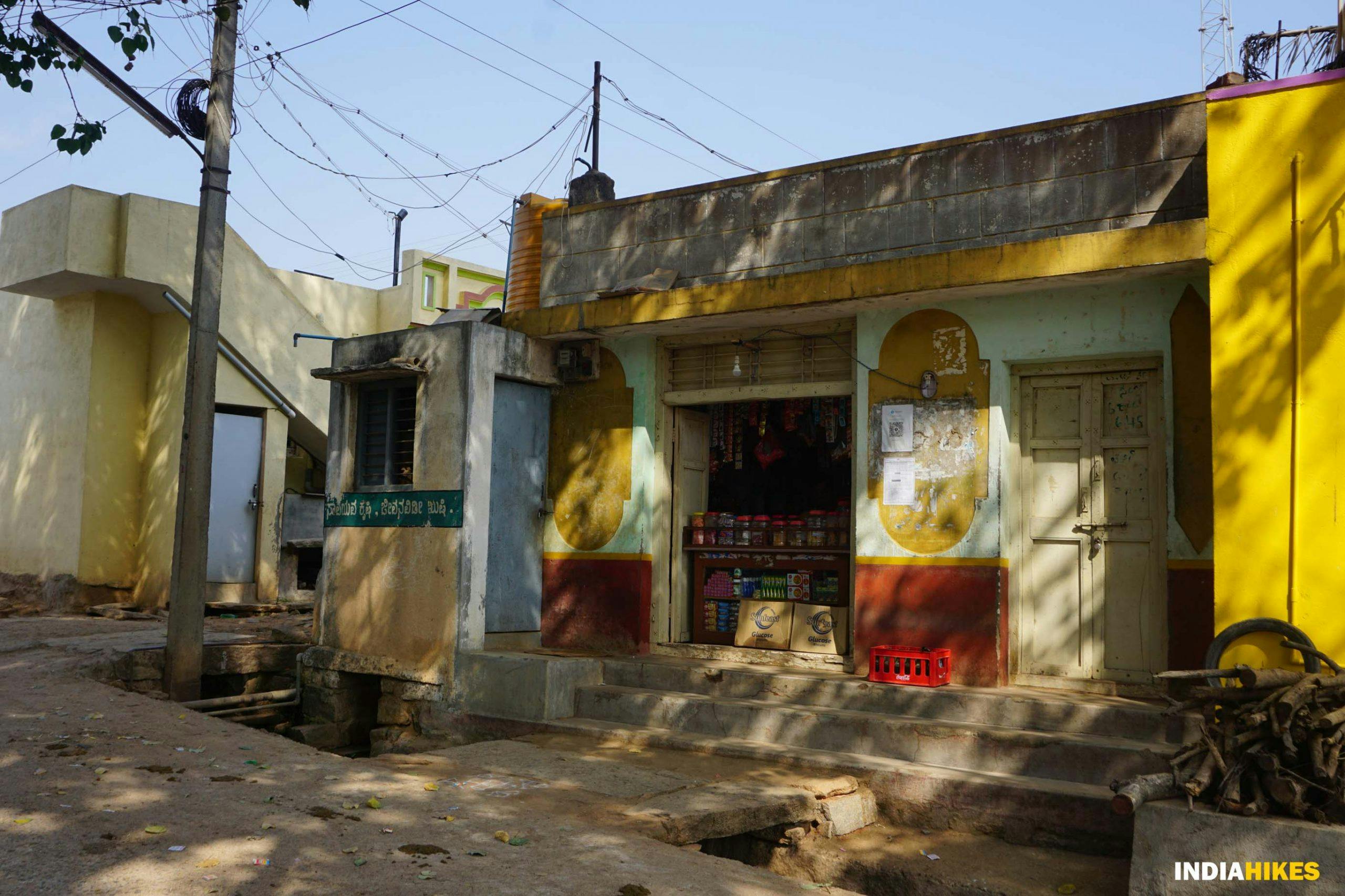
So have your water bottles filled from the base itself or from your home. Two litres of water per person will be sufficient to start the trek with.
Green Tip: The best practice will be to carry your own snacks and food in a reusable dabba. Do not take any packaged food packets on the trek.
Go through this video to see more tips on what you can carry on a trek.
Hospital: The closest hospital is Koratagere Government Hospital which is around 12 km away. Here is the location of the closest hospital from the base village.
Police Station: There are two police stations closest to Channarayana Durga Trek.
If you move North, then Madhugiri would be the closest, 10 km from the base village. Here is the contact number: 08137-282381 / 9480802974
The second option will be moving South to Koratagere. This is 11 km from Channarayana Durga. This is the contact number: 08138-232136 / 9480802954
ERSS: For any kind of emergency help, you can contact the Pan-India Emergency Response Support System (ERSS) number- 112
ATMs: There are ATMs in the main towns of Madhugiri and Koratagere. All these nearest ATMs are around 10-12 km away. You don’t have any ATMs at the base village.
We recommend you follow a fitness routine 5 times a week (combination of walks, stair climbing and stretching).
By the time your trek starts, you should be able to walk 5 km between 50-60 minutes comfortably. Ideally, closer to 50 minutes.
Trekking is a sport that primarily uses your lungs, your core, and your lower body. To reach this fitness, there are just two things to work on - your cardiovascular endurance and your muscle strength. Being fit will help you enjoy the trek and will keep you safe.
Weeks 1 - 4:
- Walking
- Week 1: Keep the distance of your walk to just 2 km
- Week 2: Keep the distance of your walk to just 3 km
- Week 3: Keep the distance of your walk to just 4 km
- Week 4: Keep the distance of your walk to 5 km
- Stair Climbing: When you climb stairs, target for at least 10 floors (20 stairs per floor), and repeat it for 2 sets.
- Stretching: Keep stretching everyday. This video will help you with stretching: https://youtu.be/IDjWoSPV6ok
Take your rest days seriously, and rest. Your body recovers quickly when you rest.
Weeks 5 - 8:
- Once you can comfortably walk 5 km, the following weeks are focused on building speed.
- Everyday, walk 5 km with an intention to finish within 50-60 minutes. Do not worry if you are not there yet. You will get there by the end of Week 8.
- Once a week, go for 10 km walk at a stretch. This will help build your endurance. Do not worry about the time you take to cover this distance.
- Continue with stair climbing and stretching.
Important Note: If you are not a regular runner, do not start running all of a sudden.
Three things happen when you are not fit:
- You do not enjoy the trek
- You struggle to be a part of the team
- You miss out on a deep transformative experience that trekking can offer
Good part is, it’s not difficult. All you need to do is start following the fitness routine 45-60 days before the trek begins.
We are here to help you in this fitness journey. Just start slow and as long as you are committed and consistent with your routine, you are in for an unforgettable trek experience.
❖ Madhugiri Trek
Madhugiri Trek is one of the most spoken-about treks, among the treks in Karnataka. This Trek is to the peak of the fort standing on one of Asia’s largest monoliths.
+Channarayana+Durga+Fort+Trek-+View+of+Madhugiri+as+you+approach+the+monolith-+Gautam+Singh.jpg?auto=compress,format)
The highlight is the rock dome, atop which stands a fort!
❖ Jayamangali Black Buck Reserve
The Jayamangali Blackbuck Reserve is one of only two reserves dedicated to the antelope in Karnataka.
There are about 80 species of plants that have been recorded and around 67 species of butterflies that have been sighted along with the gorgeous blackbucks in their natural habitat. Apart from blackbucks, the area consists of Acacia and Eucalyptus plantations.
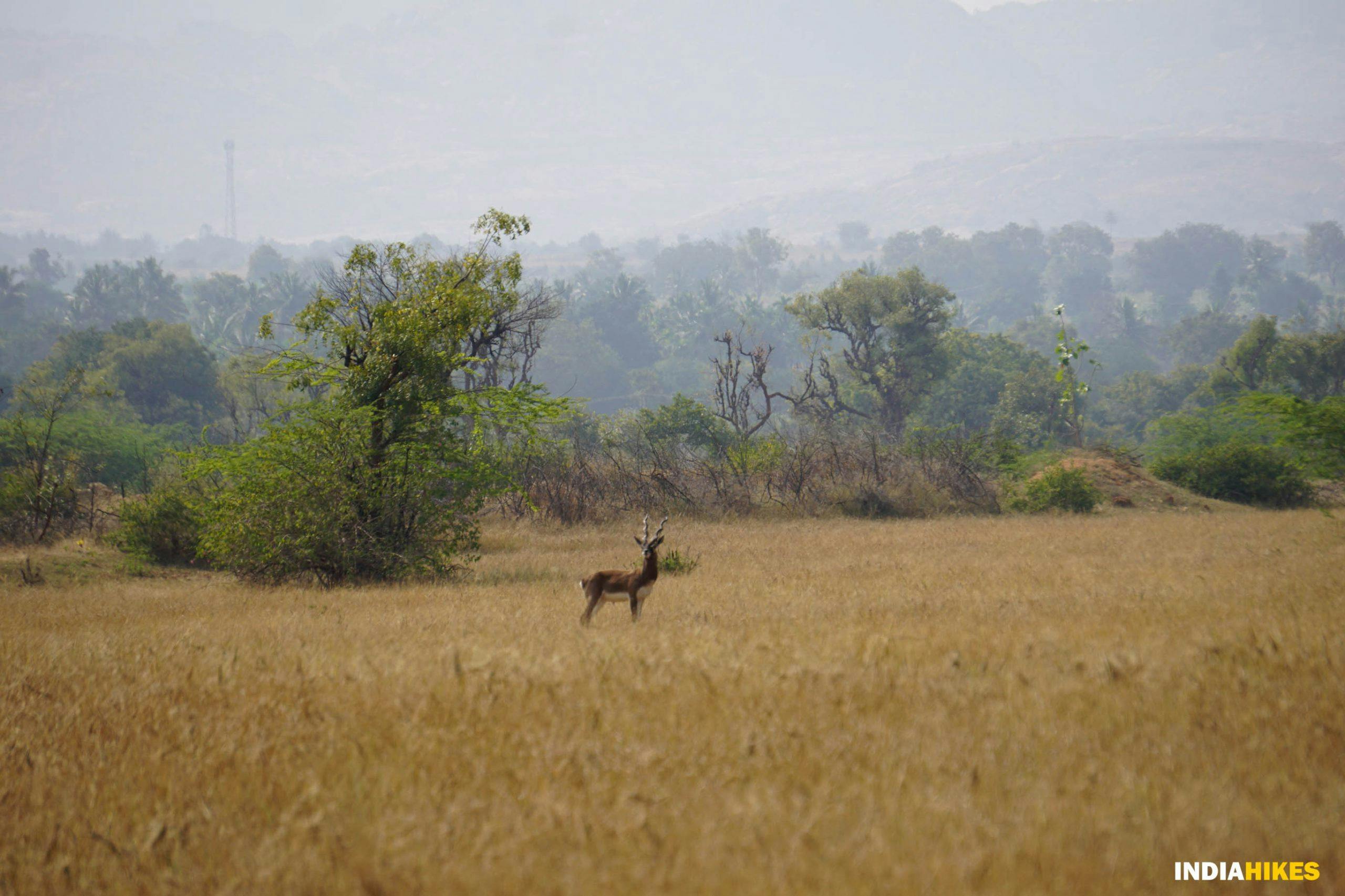
The reserve is an absolute delight for wildlife enthusiasts and photographers or simply anyone who wants to spend a day amidst the fresh countryside air!
There are no safaris as such so you will have to move around in your own vehicles.
❖ Siddarabetta
Siddarabetta in Kannada means ‘Hill of Saints’. It is one of the most popular places to visit around Madhugiri.
This is an appealing hike for Trekkers and Pilgrims. The pilgrims come to visit the Shrine of Lord Shiva at the top of the hill. There is also an ashram situated at the base.
+Channarayana+Durga+Trek-+Madhugiri-Trek-Caves-of-Siddarabetta-Indiahikes-Suhas-Saya.jpg?auto=compress,format)
The rocky trail and the caves add a lot of thrill to the climb. The route from the caves has uneven rocks and boulders, allowing only a single person to cross at a time. Exploring the caves is a cherry on the cake, as the view from the peak is equally rewarding as it is surrounded by the lush greens of the Devanarayana Durga Forest.
Yes, we do have parking facilities at the basecamp. You are welcome to come in your car/ bike.
However, you will park your vehicle about 300 meters away from the actual base. Indiahikes cannot take responsibility for the safety of your vehicle.
We have been running this trek since 2022. Our trekker's vehicles have remained completely safe at the parking space. We have not encountered any untoward incidence regarding the same.
The Indiahikes Spirit of Trekking
We're always ready for adventure
Trekking comes with uncertainty. Weather, terrain, and setbacks are part of the journey. We embrace them with resilience and openness—each challenge makes us stronger and more appreciative of nature's beauty.
We embrace low-noise trekking
We blend into nature, not the other way around. We avoid shouting, loud music, and noisy games. In silence, we hear birdsong, streams, and the wind—inviting peace, reflection, and a deeper connection with nature.
We protect the environment
We protect the environment by minimising waste, reusing resources, and picking up litter. We carry eco-bags, segregate waste, and inspire others to preserve trails. Sustainable trekking ensures these mountains remain beautiful for future generations.
We are self-sufficient
We carry our load as much as possible, manage our gear, and stay prepared for all situations. Self-sufficiency builds confidence, independence, and respect for fellow trekkers, support staff, and the trail itself.
We support each other
Trekking is not a solo act. We wait for each other, share burdens, and uplift teammates. By putting the group first, we build strong bonds and help everyone complete the trek joyfully.
We are fit and prepared
We train well before our treks. This helps us walk longer, handle emergencies, and contribute to the team. Fitness ensures we are never a burden and always ready to help when needed.
Photo Gallery
Read More on the Channarayana Durga Weekend Trek
|| Trek Trivia ||
Grand History of Channarayana Durga
The Beginning
The Channarayana Durga fort was built in 1513 AD, Channappa Gowda Chikkabhoopala. The fort architecture is similar to that in Chitradurga, popularly referred to as ‘yelu suttina kote’. The design has narrow passages and false entrances to aid in defense.
Chikkabhoopala had 3 sons - Thontendra, Channappa Gowda, Sappendra. Both elder kids die at an early age. In remembrance, the fort is named after the 2nd son. Last surviving son Sappendra also had 3 sons who were given Midigeshi, Madhugiri and Channarayana Durga to administer.
Kalappa Gowda handled administration of Channarayana Durga. But his two sons Ramappa Gowda and Thimmappa Gowda feud for control over the fort. Thimmappa Gowda seeks support from then Mysore ruler Chikka Devaraja Wodeyar.
Eventually, the entire region of Madhugiri and Tumkur was brought under Mysore kingdom rule by the 1670s. Both the brothers - Ramappa Gowda and Thimmappa Gowda are imprisoned, ending the long standing feudal rule.
Around the same timeline, the control over Bengaluru is also bought from then emperor Aurangzeb for around 3 Lacs.
Action!
After the demise of Chikka Devaraja Wodeyar and emperor Aurangzeb in the early 1700s, the influence of Mysore kingdom weakened. Eventually by the mid 1700s - 1762 AD, the control of the fort was taken over by Hyder Ali and then passed on to Tippu Sultan after his demise around 1782 AD.
Tippu further fortified the fort with brick & mortar extensions with gun & cannon holes to support modern weaponry. The fort was also converted into a garrison (weapons & gunpowder store). Iron ore in the surrounding area was mined and smelted (melted with sulfur & potassium nitrate) at the fort.
The fort became an important supplier of raw materials that was transported to weapon manufacturing factories in Bengaluru, Srirangapatna, Chitradurga and Nagara. These were known as Thaaramandala petes, manufacturing gunpowder, pellets, guns, rockets and also advanced weapons such as missiles. The finished weapons made their way into bunker style armories in Bengaluru (now Kalasipalya) and Srirangapatna.
After the Britishes took over, it was proposed by Arthur Wellesly in the early 1800s to create a permanent garrison owing to its significant geographical and historical advantages. It was deemed to be one of the most dependable forts to defend in the entire kingdom of Mysore.
However, it did not materialize and the garrison was eventually shifted to cantonment in Bengaluru. In the mid 1900s, under the supervision of Lord Cornwallis, the armories provided a constant supply of gunpowder and weaponry into Britain which eventually was utilized in the world war against Germany.
Thus, this fort has always had its importance and relevance throughout its 500+ years history.
As it stands now
Although the fort is not yet popular with the tourists, it has been plagued by treasure hunters for many decades. The place has been dug up irresponsibly in search of rumored treasures, precious stones, idols and historic foundation stones.
The fort, as always, endures all and continues its legacy for many more centuries to come.
Fun fact : Popular song in 1980 Kannada movie Bangarada Jinke (Vishnivardhan & Bharathi) - “Olume Siriya Kandu” was shot at this fort. Gives us a glimpse of how it was 45 years ago.
Credit & References :
Dharmendra Kumar Arenahalli (Historian, Author, Researcher)
Treks by Categories

Indiahikes is Officially Partnered with IMF
Central Govt. Employees can avail Special Casual Leave on all Indian treks. Find out how.
Quick Links
Follow Us On




Contact Us

080 468 01269

Mon to Fri - 9.30 AM to 7.30 PM
Sat and Sun - 9.30 AM to 6.30 PM
Bengaluru Office
139, Defence Colony Road, Defence Layout, Sahakar Nagar, Bengaluru, Karnataka - 560092
Dehradun Office
Mohabbewala, Titan Road, Near Titan Factory, Chandramani Khalsa Dehradun - 248002
© 2026 Indiahikes Private Limited
All images are copyrighted by their respective authors.